A standard job-site unit is the base restroom for active construction work, where OSHA sanitation guidance (29 CFR 1926.51) calls for one toilet per 20 workers on a project without running water. The unit ships in…
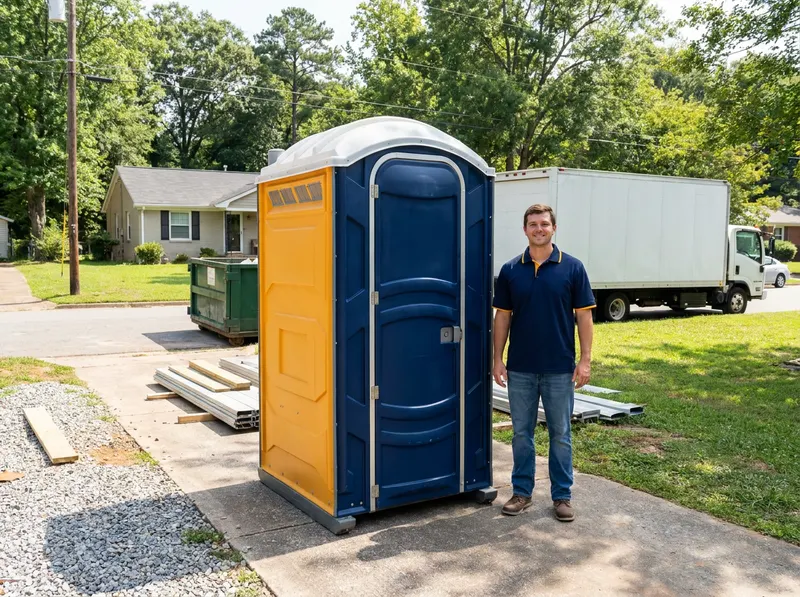
A standard job-site unit is the base restroom for active construction work, where OSHA sanitation guidance (29 CFR 1926.51) calls for one toilet per 20 workers on a project without running water. The unit ships in high-visibility colors, sits level on a flat pad, and needs a footprint of roughly 4 feet by 4 feet plus door-swing clearance. Placement matters more than crews expect: a unit set on the packed gravel staging near a Woodlawn slab pour stays stable, while one left on soft fill after a rain can lean. Our team sets each toilet where the service truck can reach it, within about 25 feet of a driveable path, so weekly pumping does not require moving the unit or crossing fresh concrete.
The standard unit fits general labor sites: framing, roofing, remodels, and utility work across Highland Park, Forest Park, and Norwood where a crew of 5 to 15 works for weeks at a time. For sites that need hand-washing or a cleaner finish for client-facing trades, a deluxe or hand-wash-station unit is the better match, and larger crews past 20 workers usually add a second standard unit rather than upsizing one. The trade-off is simple: the standard unit is the lowest-cost enclosed option and covers basic sanitation, while add-on features raise the weekly rate, most Birmingham job sites run the standard unit and add stations only where the work demands them.
Weekly service is the part that separates a usable unit from a complaint. On each visit the tank is vacuum-pumped, the interior is sanitized, the seat and urinal are wiped, and paper is restocked. A single standard unit on weekly service comfortably supports about 10 workers for a 40-hour week before it needs more frequent pumping; heavier use in Ensley or a tight Five Points South infill lot may warrant twice-weekly service, priced per visit. Rentals run in 28-day cycles, and the term can extend month to month as a project timeline shifts.
Delivery covers the full Birmingham metro and Jefferson County, including Bush Hills, Crestwood, and Avondale, with most drop-offs scheduled inside 24 hours of a confirmed order. Placement on a public street or right-of-way, common on narrow Southside blocks, can require a permit from the City of Birmingham, and the property owner or general contractor is responsible for securing it before delivery. Units placed fully on private site pads generally need no permit.
Every job gets a firm, written price after a free on-site visit.
Tell us about your standard job-site portable toilet job in Birmingham and we'll send a clear, written quote, usually the same day.
 Magic City Portable Toilet Rental